
Energy & Fuels · 2024
First pilot-scale demonstration of a pure-ammonia ceramic roller kiln
Pure Ammonia-Fueled Roller Kiln for the Production of Ceramic Tiles: A First Demonstration
Decarbonizing high-temperature industry calls for clean heat sources compatible with continuous production. A pure-ammonia roller-kiln demonstration explores this potential in practical ceramic firing.
The motivation
Ceramic firing requires sustained, stable high-temperature heat. Replacing natural gas with carbon-free ammonia could reduce CO₂ emissions from fuel combustion, but ignition, flame stability, NOx control and product quality must all be addressed. This study moves from burner development to a working pilot kiln to examine the feasibility of pure-ammonia firing.
The approach
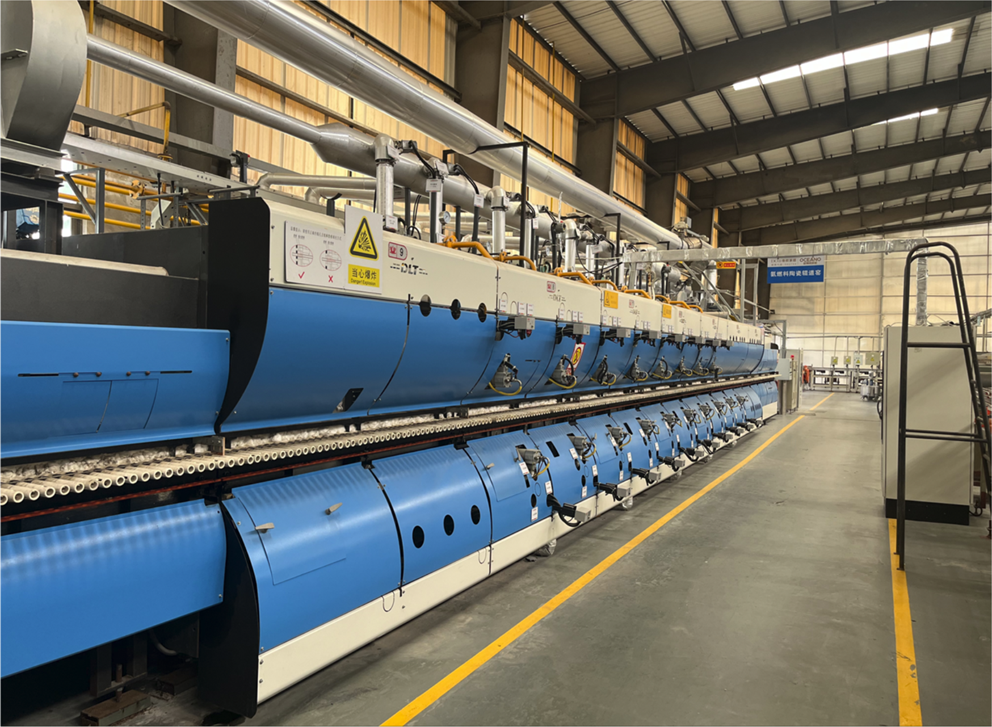
Numerical simulations and burner experiments guided a swirl-stabilized, air-staged design. All 32 burners in a 30 m pilot roller kiln were converted to ammonia. The demonstration included a 24-hour normal-production stage, with measurements of staged-combustion, SNCR and SCR performance, ammonia slip, and the appearance and properties of the fired tiles.
Key findings
- The 32 ammonia burners supported a 24-hour normal-production stage in the 30 m pilot kiln, with a firing temperature of approximately 1250 °C. This demonstrated the feasibility of pure-ammonia heat supply and tile firing under the tested conditions.
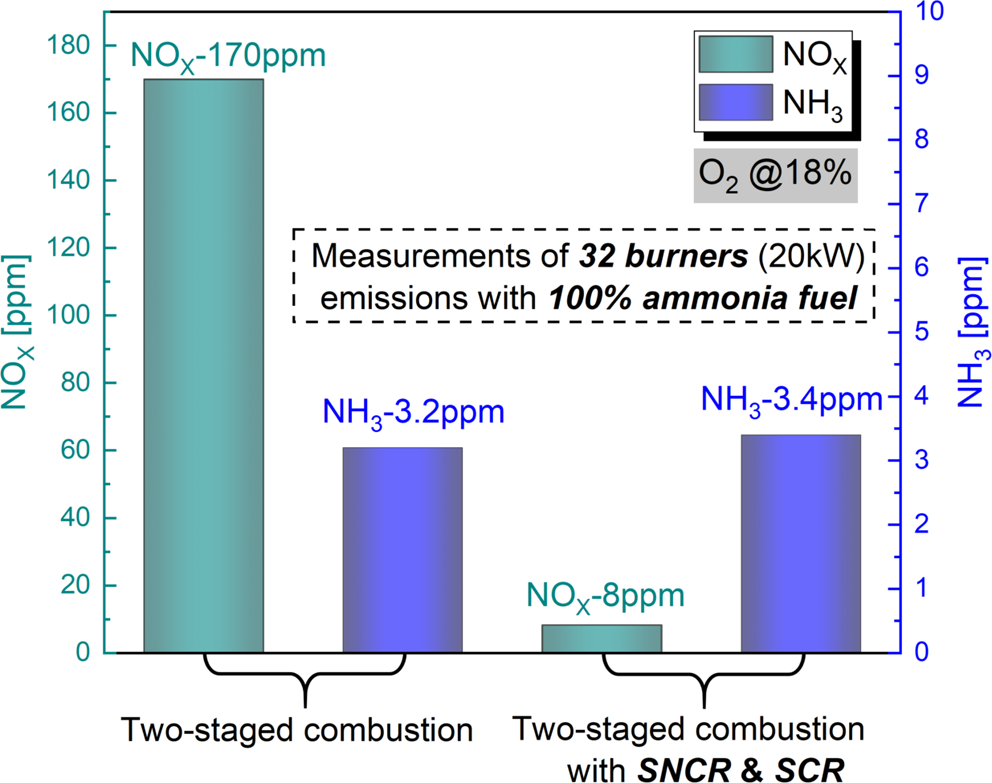
- Under the demonstrated conditions, NOx was approximately 170 ppm with staged combustion and fell to approximately 8 ppm with SNCR and SCR. Ammonia slip remained approximately 3–4 ppm. All concentrations were corrected to 18% O₂.
- Tiles fired with pure ammonia had a water absorption of 0.01% and a reported strength of 41.6 MPa, meeting the criteria stated in the paper. No obvious color difference from natural-gas-fired samples was visible to the naked eye.
About this paper
Energy & Fuels · 2024 · 38(22) · 22593–22604
Publisher record (DOI)