
Combustion and Flame · 2026
Resolving NO formation in ammonia–methane diffusion flames
Formation of NO in counterflow diffusion flames of ammonia-methane: Spatially-resolved measurements and kinetic analysis
Using ammonia alongside natural gas offers a route toward lower-carbon industrial fuels, with NO control a key challenge. This study examines NO-formation mechanisms to inform cleaner combustion.
The motivation
Co-firing ammonia with natural gas offers a gradual route toward lower-carbon industrial heating, but fuel-bound nitrogen introduces an NO-emission challenge. Most fundamental studies have examined premixed flames, whereas industrial furnaces commonly use non-premixed combustion. This study addresses the lack of quantitative counterflow diffusion-flame data and examines how mixing and flame structure alter NO formation.
The approach
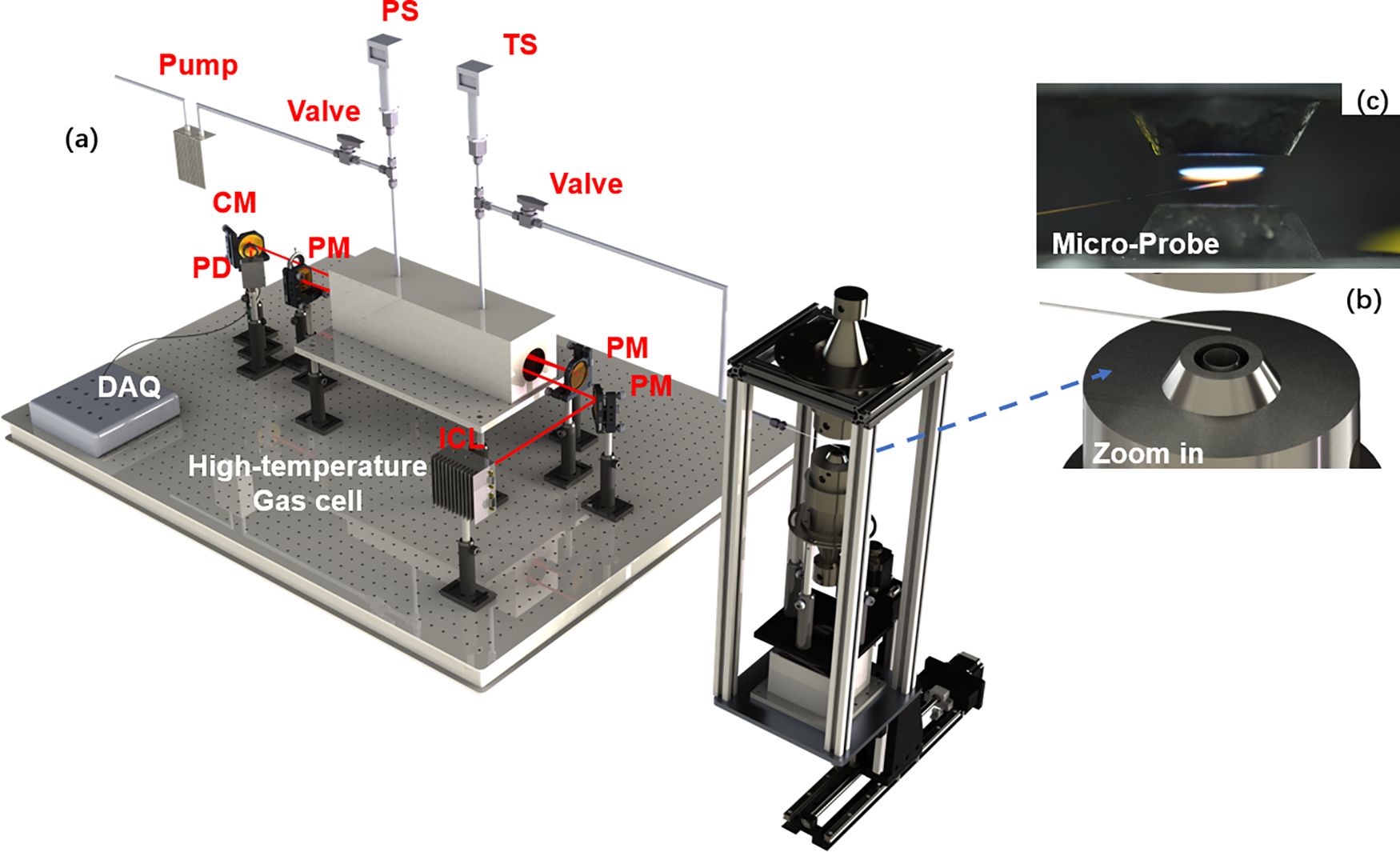
Ammonia fraction, oxidizer oxygen fraction and nozzle velocity were varied in a counterflow burner. Axial NO profiles were measured using ceramic microprobe sampling coupled with mid-infrared laser absorption spectroscopy, alongside flame-temperature measurements. Detailed chemical-kinetic simulations, sensitivity analysis and reaction-pathway analysis were used to relate the measured trends to radical distributions.
Key findings
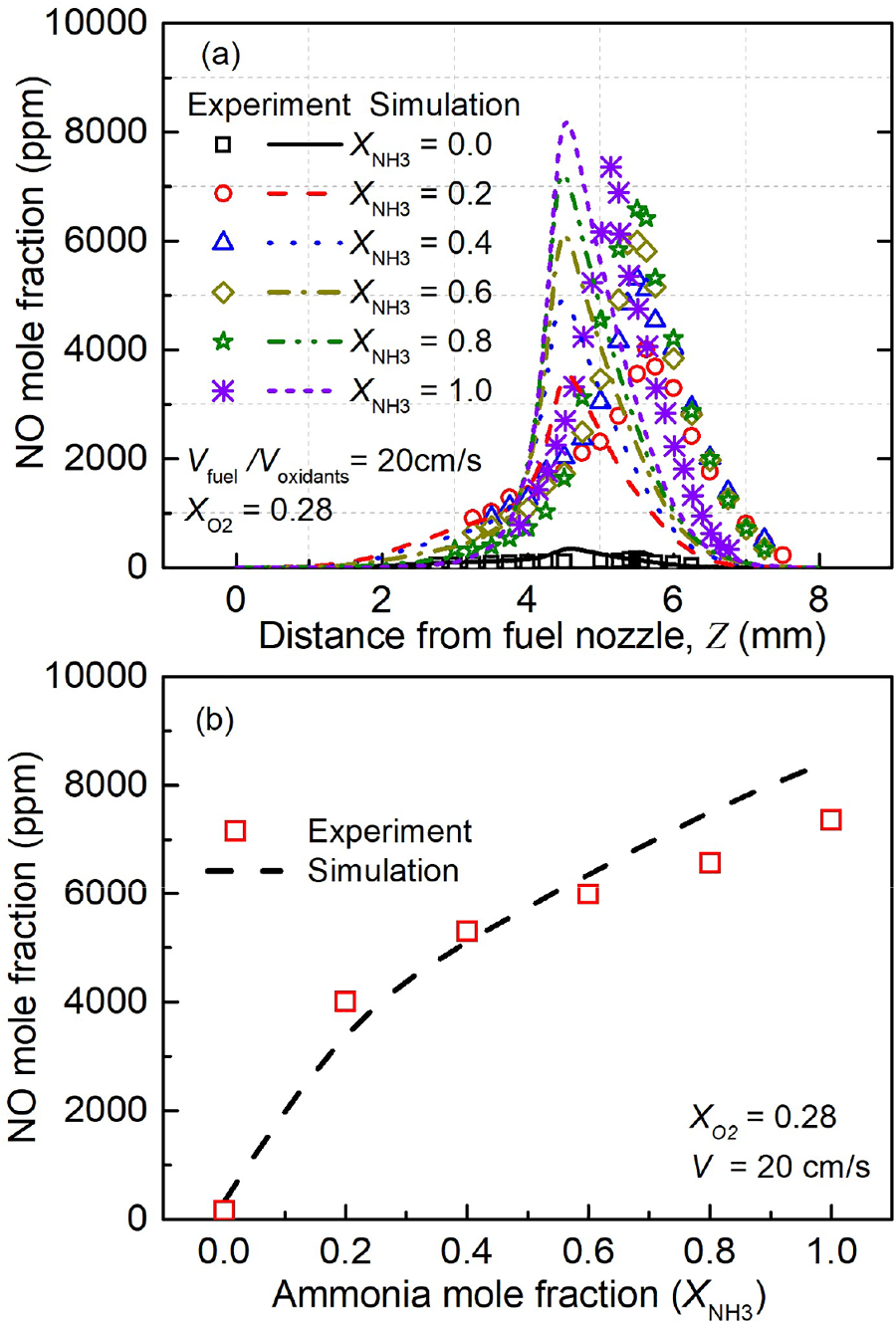
- At 28% oxygen and an inlet velocity of 20 cm/s, peak NO rises monotonically with the ammonia fraction. Kinetic analysis identifies the enhanced fuel-nitrogen route through HNO as a key reason for this trend.
- In the pure-ammonia flames studied, increasing strain lowers the temperature but raises peak NO. Mechanistic analysis links this behavior to greater spatial overlap of OH and NH₂, in contrast to the trend in pure-methane flames.
- Oxygen enrichment increased NO in both pure-fuel flames, but the ammonia flame showed a weaker response than the methane flame, reflecting their different NO-formation mechanisms.
About this paper
Combustion and Flame · 2026 · 288 · 114970
Publisher record (DOI)